
1 What is agrivoltaics (agrivoltaics, APV)?
Agri-PV enables the simultaneous use of an area for agricultural cultivation and energy generation. In Germany, the two (preliminary) standards DIN SPEC 91434 and DIN SPEC 91492 define certain core requirements for Agri-PV:
– The area loss due to the installation of an APV may be a maximum of 10 percent for high-mounted systems and a maximum of 15 percent for ground-level systems.
– The agricultural workability of the area must be ensured.
– The agricultural yield must reach at least 66 percent of the reference yield.
– Soil erosion and damage must be avoided.
– Adequate light availability and homogeneity must be ensured.
2 What advantages does Agri-PV offer?
Agri-PV is seen as a key technology as it offers an answer to multiple challenges such as climate change, rising energy costs and the need for efficient land use:
– Protection from the elements: Agri-PV increases the resilience of farms to extreme weather conditions. It protects plants, soil and animals from hail, heavy rain and frost, prevents sunburn and optimizes the microclimate. Heat stress and water evaporation are minimized. Agri-PV can also provide a sustainable solution to the increasing periods of drought caused by climate change by using suitable irrigation systems to supply previously collected rain in times of water shortage.
– Sustainable agriculture: With Agri-PV, farmers generate emission-free electricity and thus not only arm themselves against rising energy costs. By using the energy generated for their own consumption on the farm, they are laying the foundations for the further electrification of their agriculture. For example, more energy is needed for the transition to electrically powered machines and field robots and the further automation of agricultural processes such as irrigation. Finally, farmers create new sources of income by either feeding the surplus electricity from the agri-PV system into the grid or remarketing it to third parties for a profit.
– Dual land use: With Agri-PV systems, a field remains a field while electricity is produced above it. Agri-PV offers the opportunity to solve the land use conflict between the agricultural and energy sectors, especially in times of decreasing availability of arable land due to climate change.
– Contribution to the energy transition and CO2 reduction: Like other photovoltaic systems, APV systems make an important contribution to a sustainable energy supply. According to calculations by the Federal Environment Agency, every kilowatt hour of solar power saves around 400 g of CO2 compared to conventional power generation. The estimated potential for high-mounted Agri-PV in Germany is around 1700 GWp. 4 percent of agricultural land would be enough to cover Germany’s entire current electricity demand.
3. what types of Agri-PV systems are there?
DIN SPEC 91434 and DIN SPEC 91492 define basic criteria for agri-PV systems in Germany. The aim is to ensure that agricultural use remains sustainable, economically viable and predominantly maintained.
The standards distinguish between two types of APV systems:
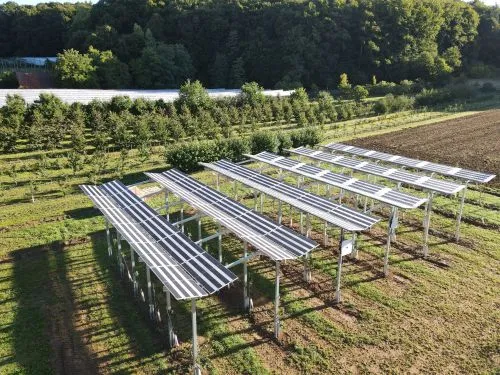
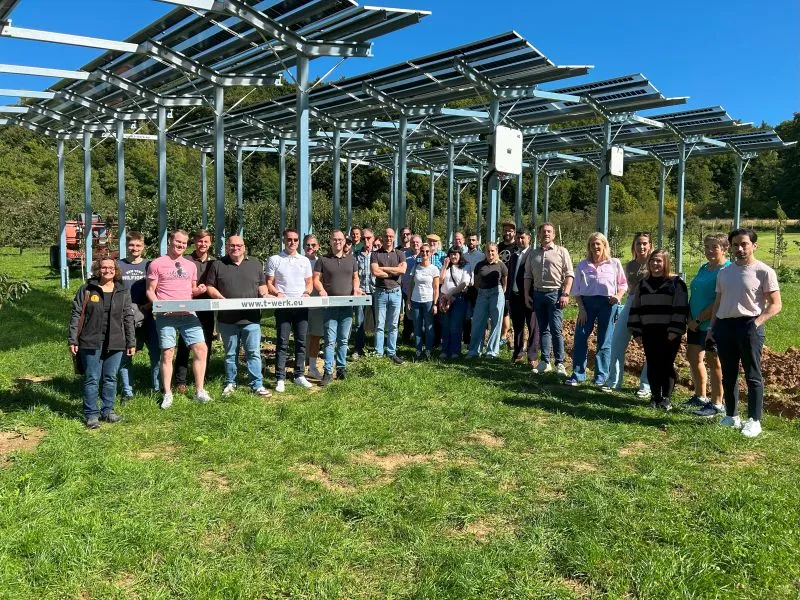
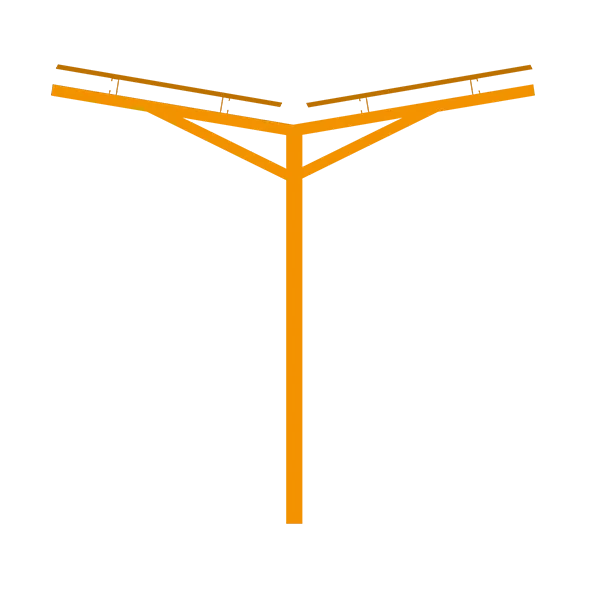
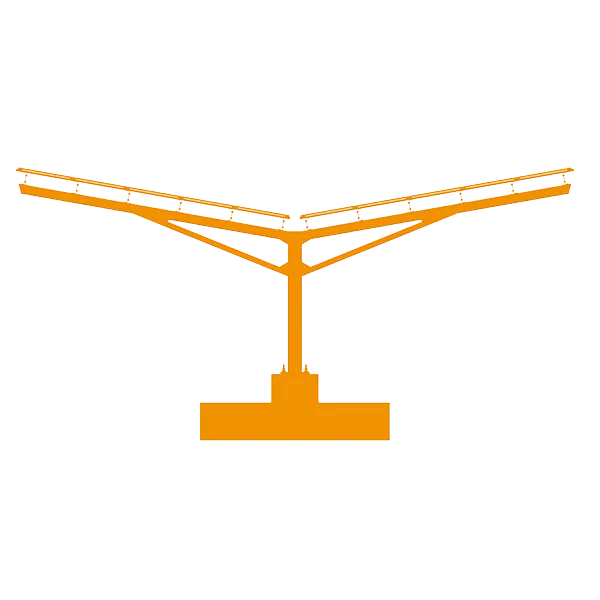
– Highly elevated systems (category I): The photovoltaic modules are located at a height of at least 2.1 meters, which enables cultivation with agricultural machinery under the modules. These systems are particularly suitable for special and perennial crops (e.g. fruit, berry and wine growing, hops. The picture above shows the cultivation of sweet cherries at the Fränkische Schweiz fruit information center under the T.Werk ARTEMIS beta system) and as permanent grassland with cut or pasture use.
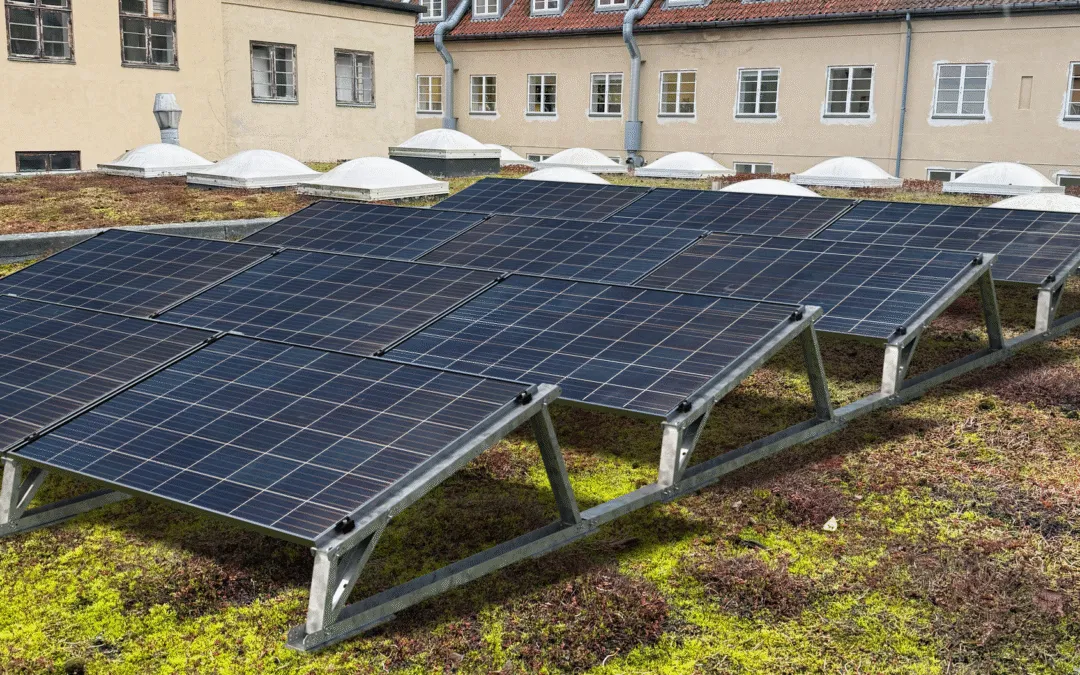
– Installations close to the ground (category II): Agri-PV systems that allow cultivation between the rows of modules. They are also suitable for permanent and special crops, annual crops or as permanent grassland.
4. what experience is there with Agri-PV?
Agri-PV has developed dynamically worldwide in recent years. Installed capacity has risen from 5 MWp in 2012 to at least 14 GWp in 2021. Many of the installed agrivoltaic systems have been scientifically monitored in order to gain far-reaching insights into agrivoltaics:
– The reduction in yield depends on the shading, i.e. the row spacing of the Agri-PV elevations and the type of modules used (e.g. semi-transparent modules).
– Shade-tolerant vegetables and berries can tolerate up to 30 percent less direct sunlight without major yield losses. Cereals and maize react more sensitively to shade.
– The Agri-PV test facility in Heggelbach showed that shading by PV modules can have a positive effect on crop yields, particularly in hot and dry summers. In the particularly hot and dry summer of 2018, higher yields were achieved for celery (+12%), potatoes (+86%) and winter wheat (+3%) despite around 30% less light. Evaporation also decreased, which showed potential for saving water.
– Fraunhofer ISE discovered that the vegetation has a cooling effect on the photovoltaic modules, which means that they produce more power than expected.
– For some crops, shading has a positive effect, as the ripening phase is extended and the produce can be marketed over a longer period.
Although the economic viability of APV systems is heavily dependent on the location, the type of crop and the respective funding policy, national and international projects show successful application in vegetable and fruit growing, wheat and aquaculture.
5. which legal and political framework conditions influence the implementation of Agri-PV in Germany?
The implementation of agrivoltaic systems in Germany is influenced by a number of legal and political framework conditions that have been adapted in recent years to promote expansion:
– EU direct payments: Agricultural land on which category I or II agri-PV systems in accordance with DIN SPEC 91434 are installed will remain eligible for aid. This means that farmers can continue to receive the majority of their premiums for the agricultural use of the land. The important thing is that the agriculturally usable area is reduced by a maximum of 15%.
– Public building law: Agri-PV systems are considered structural installations and generally require a building permit.
– Outdoor area (Section 35 BauGB): Since the EEG 2023, there has been an explicit privilege for agri-PV systems if they meet the requirements for special solar systems, have a spatial-functional connection to an agricultural business, the floor area does not exceed 25,000 square meters and only one system is operated per farmstead. A dismantling obligation in the event of permanent cessation of use is a prerequisite. The expansion of renewable energies is in the overriding public interest and serves public safety (Section 2 EEG 2023), which must be taken into account when weighing up interests.
– Development plan: If a development plan exists, it must permit both the solar installation and the agricultural use, ideally by designating a “special area Agri-PV”.
– Inheritance tax, gift tax, land tax and land transfer tax: Areas with agri-PV systems that comply with DIN SPEC 91434 will continue to be counted as agricultural and forestry assets, which means that tax benefits will be retained.
– Renewable Energy Sources Act (EEG 2023): Grid connection and electricity purchase: System operators are entitled to priority grid connection and purchase of the electricity generated.
– Financial support: Direct marketing is mandatory for systems over 100 kWp. Systems over 1000 kWp must participate in tenders issued by the Federal Network Agency.
– Technology bonus: Agri-PV systems will receive a higher technology bonus in the EEG 2023 to compensate for the higher costs. This will be made possible via special sub-segments in the tenders or, in the case of smaller systems, via a calculated bonus. The funding limit for Agri-PV has been raised to 50 MWp. However, this point (as of September 2025) still requires approval of the “Solar Package 1” by the European Commission under state aid law.
– Municipal participation: Operators can grant municipalities subsidies of up to 0.2 ct/kWh to promote local acceptance.
6. what is the social acceptance of Agri-PV?
Social acceptance of agrivoltaics is noticeably higher than for traditional ground-mounted PV systems. For example, a survey conducted by the University of Bonn in 2025 found that 44% of respondents would be willing to pay a surcharge for electricity generated by agrivoltaics. For conventional solar parks, only 20 percent were willing to do so. The main reason for the higher acceptance is that the land remains an active part of regional agriculture. The acceptance of agri-PV is high if
– The agricultural use remains recognizably preserved.
– Citizens and municipalities benefit directly, for example through participation models (community energy, lease agreements with farmers, etc.)
– ecological added value is created (for example by protecting agricultural crops from the effects of the weather).
Accordingly, with targeted participation, transparent communication and site-adapted design, agri-PV can even be perceived as a benefit for the landscape and the region.















0 Comments