In times of climate change, sustainable construction methods are becoming increasingly important. One option that combines ecological and energy benefits is the combination of a green roof and photovoltaics. Green roofs buffer rainwater, reduce the temperature in the building and its surroundings, promote biodiversity and improve the microclimate. If the green roof is combined with a photovoltaic system, there are a few factors to consider. We have compiled an overview of the opportunities, legal obligations and technical aspects of planning and installation.
Advantages of combining a green roof and photovoltaic system
- Cooling of the PV modules: Green roofs generate evaporative cooling, increasing the efficiency of the PV modules.
- Less deposits: Green flat roofs bind dirt and thus reduce deposits on the PV modules.
- Natural ballasting: If the substrate layer acts as natural ballast, less additional weighting is required. This saves material and installation effort.
- Longer service life: the greening protects the roof waterproofing and PV substructure from UV radiation and temperature fluctuations.
- Multifunctional use: The combination of greenery and photovoltaics makes optimum use of the roof area and reduces land conflicts, especially in densely populated urban areas.
- High acceptance and advantages in tenders: Local authorities are increasingly rating combined solar green roofs positively, as they combine energy and climate protection effects.
Legal requirements for photovoltaics, green roofs and combination regulations
We have compiled an overview of the state-specific regulations on solar obligations, green roof obligations and their combination in Germany. For a specific building project, the relevant state laws, state building regulations, municipal statutes and implementation regulations should be checked.
Baden-Württemberg (BW)
- PV obligation: PV obligation for new buildings (residential and non-residential buildings) and for basic roof renovations.
- Green roof obligation: Not a state obligation, but often a municipal requirement.
- Combination: Reduction of PV coverage with mandatory green roof
Bavaria (BY)
- PV obligation: Mandatory for new buildings and complete roof renovations for non-residential buildings.
- Green roof obligation: No state obligation, locally via development plans.
- Combination: No national rule. Exceptions for land conflicts.
Berlin (BE)
- PV obligation: At least 30 % roof area for new buildings and major roof conversions. Exceptions possible.
- Green roof obligation: Mandatory for flat roofs > 100 m², except for occupied use (PV counts as such).
- Combination: Both should be implemented as far as possible through suitable combinations.
Brandenburg (BB)
- PV obligation: On public and commercial buildings with a roof area of at least 50 m², 50% must be covered with PV for new builds and renovations.
- Green roof obligation: No state regulation – dependent on local authorities.
- Combination: The stricter specification takes precedence.
Bremen (HB)
- PV obligation: minimum coverage of 50 % of the roof area for new buildings, PV obligation for renovations with a roof area of 50 m² or more
- Green roof obligation: Statutory green roof obligation for certain new buildings
- Combination: Solar green roof requirement: Both obligations must be fulfilled.
Hamburg (HH)
- PV obligation: Since 2023 for new buildings, from 2024 also for roof conversions
- Green roof obligation: 70% greening + 30% PV mandatory from 2027
- Combination: Hamburg makes solar green roofs mandatory.
Hesse (HE)
- PV obligation: Only for state-owned buildings.
- Green roof obligation: Municipally possible, not a state obligation.
- Combination: Voluntary, support programs from local authorities.
Mecklenburg-Western Pomerania (MV)
- PV obligation: No mandatory regulation.
- Green roof obligation: No state regulation.
- Combination: Freely plannable, municipal exceptions possible.
Lower Saxony (NI)
- PV obligation: 50 % occupancy obligation for new buildings with a roof area of more than 50 m².
- Green roof obligation: Only locally per development plan.
- Combination: PV obligation does not apply if there are conflicting public obligations (e.g. greening).
North Rhine-Westphalia (NW)
- PV obligation: Staggered until 2026 – applies to new buildings and later also to renovations.
- Green roof obligation: No obligation, but replacement green space regulation.
- Combination: Favoring the combination of green roof and PV
Rhineland-Palatinate (RP)
- PV obligation: Mandatory for commercial and public buildings, residential buildings “PV-ready”.
- Green roof obligation: Not a state obligation, via municipal development plans and building regulations.
- Combination: Both measures should be combined – exceptions in case of incompatibility.
Saarland (SL)
- PV obligation: Announced
- Green roof obligation: No nationwide obligation.
- Combination: No regulation yet.
Saxony (SN)
- PV obligation: Not mandatory.
- Green roof obligation: Not mandatory.
- Combination: Can be implemented flexibly at local level.
Saxony-Anhalt (ST)
- PV obligation: Not mandatory.
- Green roof obligation: Not mandatory.
- Combination: No specification.
Schleswig-Holstein (SH)
- PV obligation: Since 2025 also for residential buildings – at least 30 % roof area.
- Green roof obligation: No state requirement.
- Combination: Efforts to implement both measures in parallel
Thuringia (TH)
- PV obligation: No national requirement.
- Green roof requirement: No specification.
- Combination: Optional according to municipal statutes.
Technical and planning-relevant aspects of PV on green roofs
If a photovoltaic system is installed on a green flat roof, integrated planning is important. Roof greening, statics, load distribution, module installation and maintenance routes must be coordinated:
Elevation & minimum distances
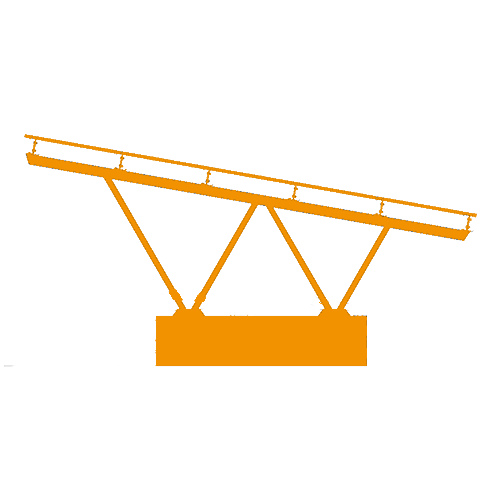
- According to current guidelines, a distance of at least 30 cm is required between the bottom edge of the module and the substrate to ensure air circulation and light for the vegetation.
- Some local authorities even require 40 cm, especially where the combination of greenery and PV is mandatory.
Statics, wind & ballasting
- Due to the higher elevation, the wind forces acting on PV systems on green roofs are twice to three times higher than on classic flat roofs.
- Green roofs are usually structurally strong
- It is important to optimally combine ballast and load distribution.
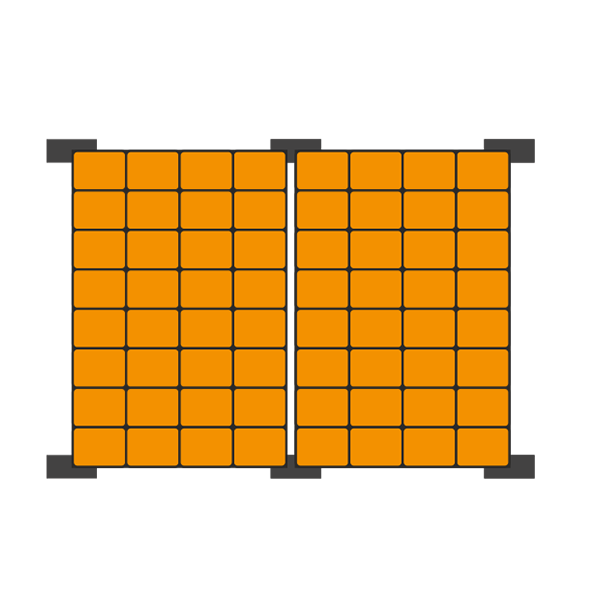
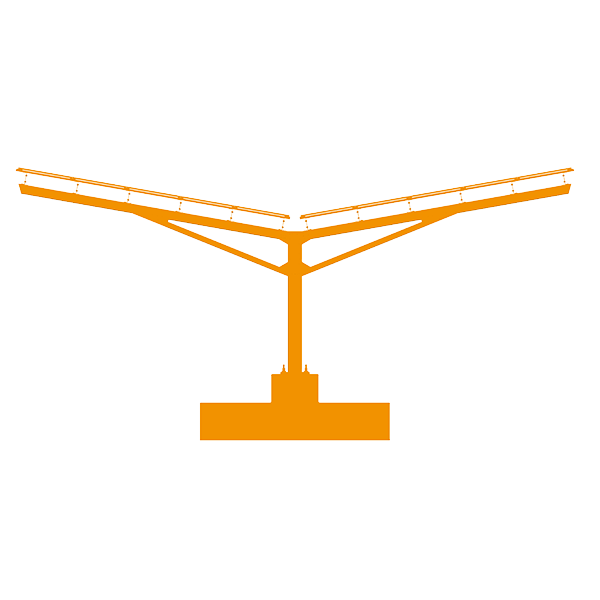
- Modern systems such as TRITON flora use the substrate as a natural ballast weight.
Choice of material & corrosion protection
- Components should be corrosion-resistant for 25 to 30 years.
- Important: No ballast stones with an unknown pH value directly on galvanized steel.
Assembly and maintenance
- With fresh green roof structures, the substrate can settle slightly. We recommend planning short rows of modules to compensate for possible settling. This makes the system more stable and easier to readjust.
- If you want to be on the safe side, install the PV system only after the first growth and establishment phase – but this depends on the type of greenery.
- One or two visual inspections per year are mandatory to check for fouling or deposits. Suitable maintenance routes must be planned for this.
Conclusion
The combination of photovoltaics and green roofs offers considerable ecological and energy benefits. It is already becoming a reality in many municipalities. With modular, pre-assembled solutions such as TRITON flora, the right technology is already available to implement projects quickly, safely and economically. The next step is clear: establish standards in planning and train installers specifically on the special features of green roof PV.