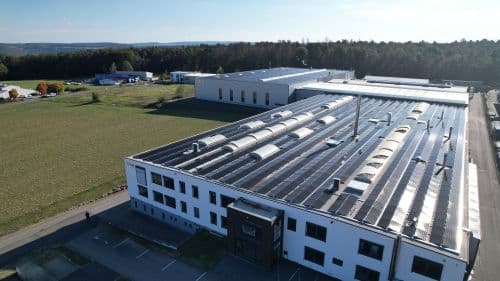
Flat roofs suitable for the installation of a photovoltaic system are diverse. Just like the substructures found on the market. So how do you find the right mounting system? In this article, we show seven central criteria that are decisive when selecting a high-quality flat roof system.
Requirement 1: Installation that protects the roof membrane
The most important criterion when selecting a mounting system for the attachment of photovoltaics on a flat roof is the maximum protection of the roof membrane. Since flat roofs are exposed to higher weather loads due to their low pitch, the installation of the PV substructure should in any case be penetration-free, i.e., without drilling into the roof.
For the same reason, swarf-free installation is recommended. If metal shavings are produced during the attachment of photovoltaics, these can react with the various roof coverings of flat roofs, for example bitumen or foil, and damage the roof membrane in the medium term.
The third criterion that a substructure should fulfill to protect the roof membrane is its low ballast requirement. In the penetration-free installation of a PV system on a flat roof, stability is ensured by ballasting. Here it is important that the mounting system is aerodynamically optimized in order to exert as little load as possible on the roof.
These three requirements—penetration-free and swarf-free installation as well as aerodynamic optimization for stability—are fundamental for the safe attachment of photovoltaics on flat roofs. They ensure that the roof membrane is protected in the long term and consequential damage to the entire building is avoided.
Requirement 2: High-quality materials
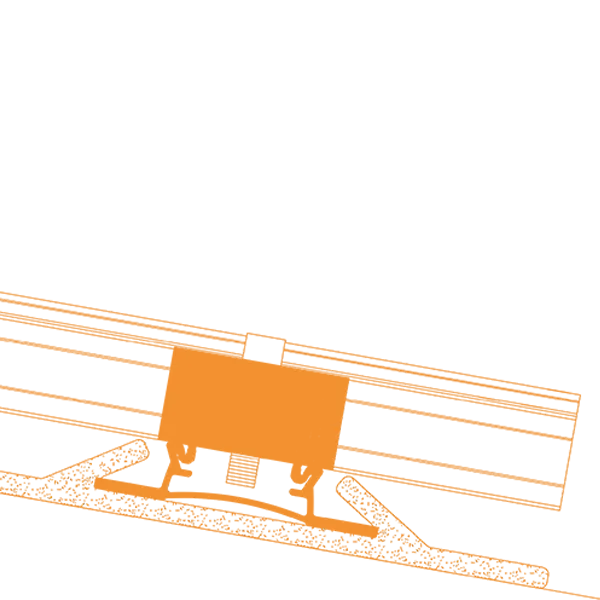
Mounting systems for photovoltaics on flat roofs must withstand permanently high loads. Therefore, only high-quality, corrosion-resistant, and weather-resistant materials should be used. Galvanized and coated steel, aluminum, and stainless steel ensure high stability and a long service life, even with permanent exposure to moisture, temperature fluctuations, and UV radiation. The use of suitable building protection mats protects the roof membrane and reduces friction.
Careful material selection is crucial for the quality of a PV substructure for flat roofs. It contributes significantly to ensuring that the mounting system remains reliable, low-maintenance, and safe for many years.
Requirement 3: Simple installation
The third requirement for a PV substructure for flat roofs is simple installation. It should be quick, safe, and require as few work steps as possible. Good flat roof mounting systems stand out through the following criteria:
- high degree of pre-assembly
- sophisticated connection technologies
- small number of different components
- minimal tool requirements
- no complex measuring and adjustment work
These factors facilitate the processes on the roof, shorten the installation time, minimize the risk of errors, and thus ultimately ensure an efficient and economical project flow.
Requirement 4: Modularity and flexibility
Another important criterion when evaluating a flat roof mounting system is its modularity and flexibility. A modular system consists of as few coordinated components as possible, which ideally can also be used in other areas of the PV substructure. This simplifies both warehousing and project planning for solar installers, as clamps, profiles, or elevation elements, for example, can be used for different projects. At the same time, recurring processes are created that facilitate both planning and subsequent installation on the roof.
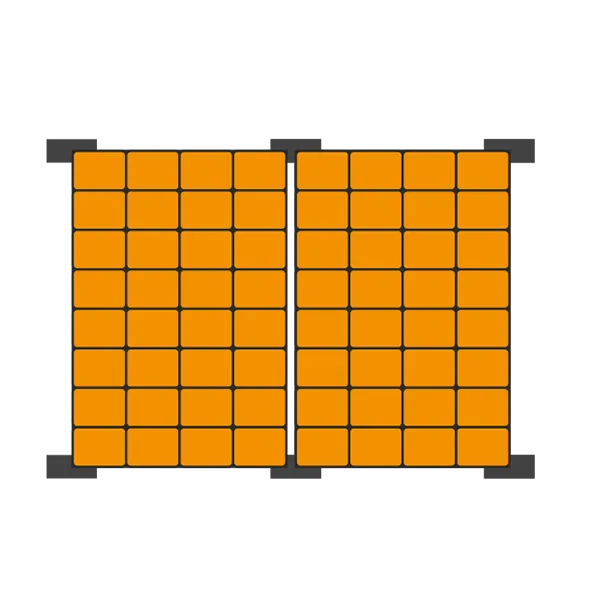
Flexibility is particularly in demand when the existing roof area is to be used as efficiently as possible. A good mounting system must be able to adapt to different roof geometries and take obstacles such as skylights, fans, or chimneys into account. Edge areas near the parapet should also be used in the best possible way, taking static and aerodynamic requirements into account. This is possible, for example, if different module orientations, such as east-west and south orientations, can be combined with each other within one system.
A high degree of modularity and flexibility supports solar installers in implementing PV projects quickly, easily, and accurately. At the same time, it improves area utilization and contributes to economical planning and installation on the flat roof.
Requirement 5: Secure pressure distribution on soft insulation
A requirement that is often given too little consideration when evaluating a mounting system for flat roofs is its suitability for soft or pressure-sensitive insulation materials. The substructure must not introduce the resulting loads into the roof structure at specific points, but must distribute them as evenly as possible over a large area.
In addition to the dead weight of the substructure and the modules, additional loads from ballast, snow, or wind also act on the roof. If these forces are transferred to contact surfaces that are too small, this can damage the roof membrane. A good flat roof mounting system therefore has sufficiently large and suitable contact surfaces to reduce the pressure.
Requirement 6: Prepared for a fall protection system
A good flat roof mounting system should also allow for the connection of a fall protection system. Flat roofs repeatedly require maintenance and repair work; a fall protection system ensures the safety of personnel on the roof.
It is particularly advantageous if the fall protection can be connected directly to the PV substructure. This avoids additional fastening points and thus unnecessary interventions in the roof membrane. At the same time, the PV mounting system and fall protection can already be coordinated with each other during planning. This simplifies installation, reduces effort, and ensures a technically clean overall solution.
Requirement 7: Integration into a lightning protection concept
The last important requirement for a good flat roof mounting system is its integration into an existing or new lightning protection concept. Since the components of the substructure represent electrically conductive components on the roof surface, their integration into a lightning protection concept is essential.
In the event of a lightning strike, high voltages and potential differences can occur, which can lead to uncontrolled flashovers, damage to electrical components, or, in the worst case, a danger to persons. Depending on the design of the lightning protection concept, either a sufficient separation distance to the external lightning protection is maintained during the installation of the photovoltaics, or the metallic substructure is professionally included in the lightning protection and equipotential bonding.
Conclusion:
A good flat roof mounting system must do much more than just securely fasten the PV modules. The integrity of the roof membrane, the interplay of high-quality materials, simple installation, high modularity and flexibility, as well as a secure load and pressure distribution on the roof are decisive. At the same time, topics such as fall protection and lightning protection should also be considered when selecting and planning the substructure.
Anyone who includes these requirements at an early stage creates the basis for a long-lasting, safe, and economical photovoltaic system. A well-thought-out mounting system not only facilitates planning and installation, but also reduces maintenance effort in the long term and enables reliable use of the roof area over many years.